
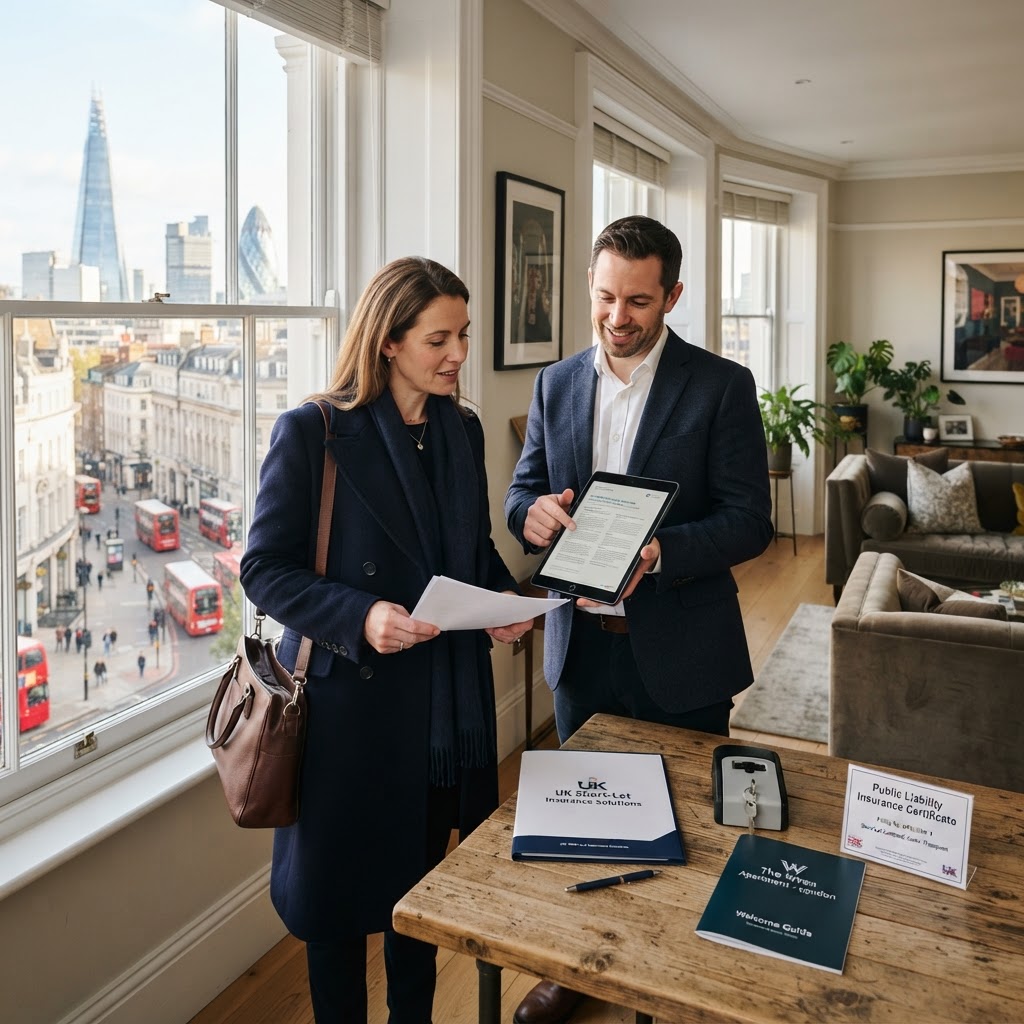
Most landlords switching a property to short-let assume their existing home insurance still applies. It does not. The moment you accept paying guests, you have changed the nature of occupancy in a way that voids most standard residential policies, including public liability cover.
Why standard home insurance does not cover short lets
Standard home insurance is underwritten on the basis that the property is occupied by the policyholder or a long-term tenant known to the insurer. Short-let guests are classified differently: they are transient paying occupants, more akin to hotel guests than tenants, and that changes the risk profile entirely. Most insurers will refuse a claim if you have been operating a short let without declaring it, regardless of how long you have held the policy.
This is not a theoretical risk. There are documented cases of UK hosts having claims rejected for water damage, theft, and guest injury because the property was listed on Airbnb without the insurer's knowledge. One operator in Manchester we spoke to had a contents claim for over £4,000 rejected after a guest damaged furniture, because the policy had not been updated when the property moved from an AST to short-let use. The insurer's argument was straightforward: the risk was never priced into the premium.
What public liability insurance actually covers
Public liability insurance covers you if a guest, cleaner, maintenance contractor or any other third party suffers a bodily injury or property damage at your short-let property and holds you legally responsible. If a guest trips on a loose stair carpet, is injured by a faulty appliance, or suffers carbon monoxide poisoning because of a defective boiler, public liability cover pays your legal defence costs and any compensation awarded against you.
Without it, you are personally liable. For serious personal injury claims, particularly those involving long-term disability or loss of earnings, awards in UK courts can run into hundreds of thousands of pounds. A single claim of that size would be financially catastrophic for most individual landlords.
The cover applies to events that happen at the property during the period of insurance, not just during a specific booking. So if a guest reports an injury days after checkout that relates to something that happened during their stay, your policy should still respond, subject to the claims notification terms.
How much cover do you need as a short-let host
The standard minimum recommended for short-let properties is £1 million public liability cover. In practice, most specialist short-let insurers offer £2 million or £5 million as their standard tier, and given the potential cost of serious injury claims in the UK, £2 million is the realistic minimum for most operators. If you run a larger property sleeping eight or more guests, or one with a swimming pool, hot tub or other higher-risk amenity, you should be looking at £5 million.
Hosts operating multiple properties should check whether their policies aggregate across the portfolio or sit independently. Some specialist insurers offer portfolio policies that cover all properties under a single limit, which can reduce admin and sometimes cost. If you manage properties across different cities, for instance running listings in Leeds and Birmingham, a portfolio policy with a specialist broker will usually be more efficient than individual policies from multiple providers.
What else should your short-let policy include
Public liability is one component of a broader short-let insurance package. A properly constructed policy should also include buildings insurance, contents cover for your furnishings and equipment, and loss of rental income cover. The last of these is frequently overlooked but matters enormously: if a burst pipe or electrical fire renders the property uninhabitable for eight weeks during peak season, the lost income can far exceed the cost of the physical repairs.
You should also look at malicious damage cover, which is distinct from accidental damage. Standard accidental damage covers spills and breakages; malicious damage covers deliberate destruction by guests. Some insurers exclude malicious damage caused by paying guests entirely, so read the policy wording carefully rather than relying on a summary document.
Buildings insurance: covers the structure, including fixtures
Contents insurance: covers furnishings, appliances and soft goods you provide
Public liability: covers third-party injury or property damage
Loss of rental income: covers revenue lost while the property is uninhabitable
Malicious damage: covers deliberate damage by guests (check exclusions carefully)
Employer's liability: required if you directly employ cleaners or maintenance staff
Employer's liability is a legal requirement in the UK if you employ anyone directly, including a cleaner on a PAYE basis. If your cleaner is a sole trader issuing invoices, you are not their employer and employer's liability is not required. But if there is any employment relationship, the law requires a minimum of £5 million employer's liability cover. Many short-let hosts are unaware of this distinction.
How Airbnb AirCover fits in — and where it falls short
Airbnb provides hosts with AirCover, which includes up to £1 million in liability insurance and up to £3 million in host damage protection. On paper this sounds comprehensive. In practice, there are significant limitations that make it unsuitable as a standalone insurance solution.
AirCover only applies to bookings made through Airbnb. If you take a direct booking, a Booking.com reservation, or any stay not processed through Airbnb's platform, there is no AirCover protection whatsoever. For hosts running a multi-channel operation, which is the right approach commercially, this is a substantial gap. The damage protection also requires you to submit claims through Airbnb's resolution process, which can be slow and disputed, and it excludes certain categories of damage including cash, fine art, jewellery and vehicles.
The practical position is that AirCover can sit alongside a specialist short-let insurance policy, potentially reducing the number of small claims you make on your own policy. It should not replace it. Any serious operator in the UK, whether managing one property or fifteen, needs a dedicated short-let insurance policy from a specialist provider.
Getting the right policy in practice
The short-let insurance market in the UK has matured considerably since 2018. There are now several specialist providers including Pikl, Guardhog, Homelet (through their short-let product), and a number of Lloyd's of London brokers who have developed specific short-let wordings. Standard aggregator sites like Comparethemarket and GoCompare will generally not surface appropriate products, so going direct to a specialist broker is the more reliable route.
When comparing policies, do not rely on the headline premium alone. A £300-a-year policy that excludes malicious damage and caps loss of rental income at four weeks offers materially worse value than a £480 policy that covers both properly. Ask specifically about the claims process, excess levels for different claim types, and whether the policy covers all booking platforms you use.
If your property sits in a building with a head lease, check the lease terms as well. Some leasehold properties in cities like Manchester, Birmingham and Leeds have clauses that restrict short-let use, and operating in breach of your lease can itself create liability issues that no insurance policy will cover. This intersects with both legal and planning compliance, and it is worth taking advice from a solicitor familiar with short-let property if you are unsure about your lease position. For any questions specific to your tax or legal situation, always consult a qualified professional rather than relying on general guidance.
If you want to understand how a properly managed short-let operation handles compliance, insurance and income optimisation together, Truestays offers a free income estimate for UK landlords. You can find out what your property could realistically earn and what the management process looks like at truestays.com.
Ready to get started?
Get a free personalised income estimate for your property. No commitment, no pressure.