
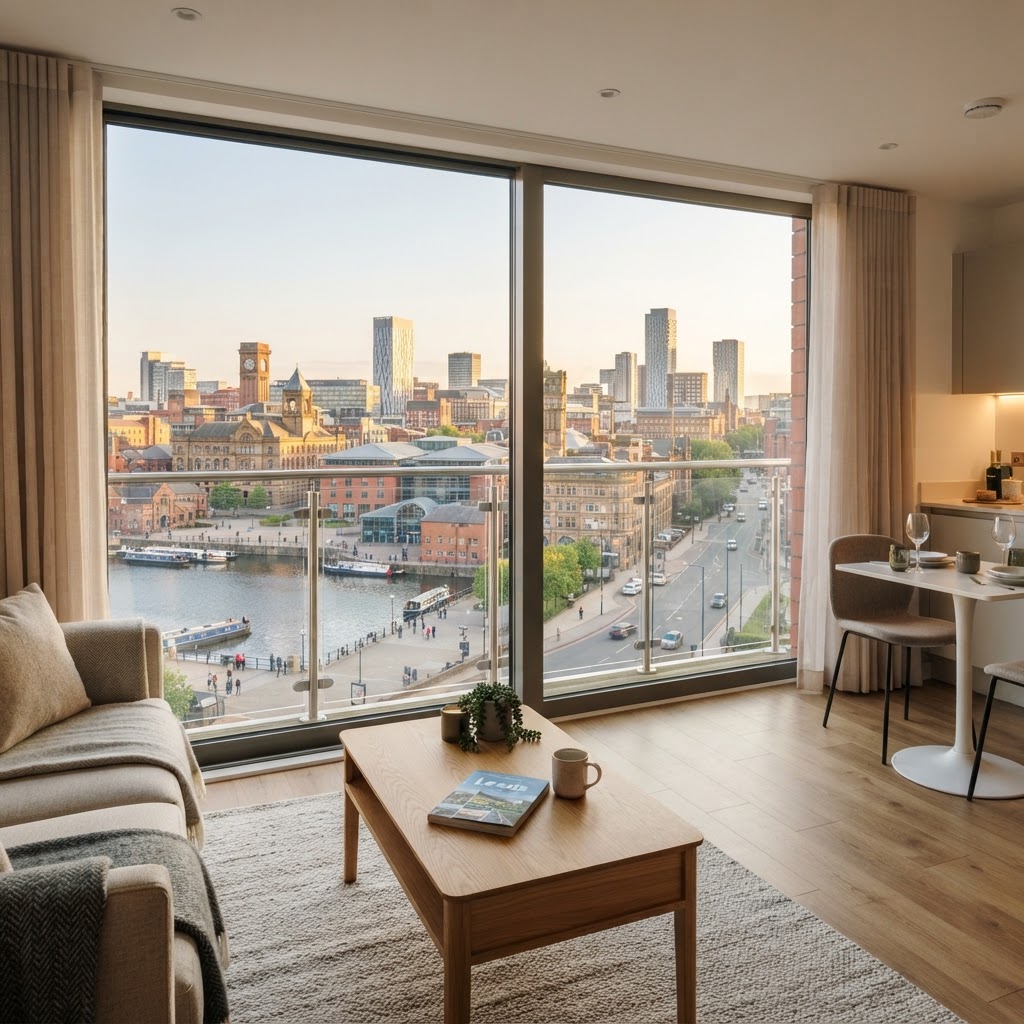
Leeds is one of the most frequently asked-about cities when landlords contact us about short-let investment. It is a large, economically active city with a growing visitor economy, but the short-let market here is more nuanced than the headline numbers suggest. Get the location and property type right and the returns are strong. Get them wrong and you will find yourself competing with budget hotels for guests who have no particular reason to pay a premium.
Why Leeds attracts short-let demand
Leeds benefits from a diversified demand base, which is one of the most important factors in short-let viability. The city hosts around 29 million visitors per year according to Welcome to Yorkshire figures, and crucially, a significant proportion of those visits are business-related rather than purely leisure. KPMG, Sky Bet, Channel 4 and a cluster of financial services firms are all based in Leeds, which generates consistent mid-week demand from contractors, project teams and relocating professionals. That kind of demand is less sensitive to seasonal swings than a purely tourist-driven market.
The university population also matters. Leeds has two major universities with a combined student body of over 60,000. Parents visiting for open days, graduations and move-in weekends create reliable demand spikes at predictable times of year. Elland Road, First Direct Arena and Headingley Cricket Ground each add event-driven demand on top of the baseline. From an operator perspective, Leeds rarely goes completely quiet, which makes it easier to maintain the occupancy rates needed to outperform long-let returns.
Which areas of Leeds perform best for short lets
The city centre, particularly LS1 and LS2 postcodes, is the obvious starting point. Apartments near the waterfront around Granary Wharf and Brewery Wharf perform consistently well because they photograph well, appeal to both leisure guests and business travellers, and are close to the main restaurant and bar offer. However, these areas have seen significant apartment development over the last decade, which means supply has risen substantially and you are competing with a larger pool of similar listings.
Chapel Allerton and Headingley represent a different dynamic. These are inner-suburb locations with strong lifestyle appeal, particularly for leisure guests and visiting families. A well-presented two or three-bedroom house in Chapel Allerton will typically outperform a city-centre studio on a per-bedroom basis because there is far less competing supply and guests will pay a meaningful premium for a home-like setting with a garden or off-street parking. Headingley picks up strong demand during cricket test matches at Headingley Stadium, with rates during major internationals frequently running three to four times the standard nightly rate.
Roundhay is worth mentioning for investors looking at higher-value properties. It is one of the most sought-after residential areas in the city, and short-let guests staying for weddings at the many venues in and around north Leeds specifically seek out properties in this area. Occupancy is lower than the city centre, but the nightly rates achievable for a well-presented four-bedroom house are substantially higher, and the guest profile tends to mean lower wear and damage risk.
What property types work in Leeds
One-bedroom city-centre apartments are the most common starting point for short-let investors in Leeds, and they can work, but the margin for error is slim. You need strong photography, consistent five-star reviews and a competitive pricing strategy to stand out. The better opportunity, in our view, is two-bedroom apartments or houses in LS1 to LS6 postcodes. They attract a wider guest mix, families and small groups as well as couples, and they generate meaningfully higher gross revenue per night without a proportional increase in operating costs.
Purpose-built serviced apartment blocks, where a management company controls multiple units in the same building, tend to produce more stable occupancy because they can be managed at scale with standardised housekeeping and maintenance processes. If you are considering a new-build apartment in one of the city-centre developments, check whether the building already has a significant number of short-let units, as this affects how you can differentiate your listing. For detailed guidance on managing a Leeds property without being there yourself, the Leeds short-let management page explains how we handle operations for remote landlords.
What yields can you realistically expect
A one-bedroom apartment in LS1 purchased for around £180,000 to £220,000 might generate gross short-let revenue of £18,000 to £24,000 per year at 70 to 75 percent occupancy. After management fees of 18 to 22 percent, cleaning, consumables, maintenance and platform costs, net income is typically in the £11,000 to £15,000 range. That translates to a net yield of roughly 5 to 7 percent, which compares favourably with long-let returns in the same postcode of approximately 4 to 5 percent gross.
For a two-bedroom house in Chapel Allerton purchased at £280,000 to £320,000, gross short-let revenue can reach £28,000 to £35,000 per year, with net figures after all costs coming in at around £17,000 to £22,000. That represents a net yield of 5.5 to 7.5 percent, with less competition risk than city-centre stock. These figures are based on properties we have managed or assessed in Leeds and are not guaranteed, but they represent what is achievable with a well-presented property and active management. If you want to see what your specific property might earn, you can get a free income estimate from Truestays.
Tax treatment has a material impact on net returns and is more complex for short-let properties than standard buy-to-let. If your property qualifies as a Furnished Holiday Let, different rules apply regarding capital allowances and profit treatment, though the FHL rules changed in April 2025. You should take professional advice on your specific situation before making any investment or tax planning decisions.
Risks and watch-outs specific to Leeds
Leeds City Council has not yet introduced a borough-wide short-let licensing scheme, though the national registration scheme for England is progressing through government consultation. This creates a degree of regulatory uncertainty that investors should factor into longer-term planning. Properties in conservation areas or converted buildings may face planning restrictions on short-let use, and permitted development rights can be removed under Article 4 directions in certain zones. Always check with the local planning authority before committing.
The biggest operational risk in Leeds, in our experience, is the concentration of leisure demand around specific event weekends. Elland Road fixtures, festivals in Millennium Square and major cricket matches create sharp demand spikes that are followed by slower periods. Operators who rely on these peaks to make their annual numbers look good often underestimate the softness in February and November. A well-managed property in Leeds should be generating reasonable occupancy throughout the year, not just during the busy periods.
New apartment developments in LS1 and LS2 have increased supply significantly, so differentiation through quality and reviews matters more than it did five years ago.
Parking availability is a practical issue that many investors overlook — properties with off-street parking or easy access to a secure car park consistently achieve higher ratings and repeat bookings from business travellers.
The Leeds serviced apartment market includes a number of professional operators running large blocks, which sets a quality benchmark that independent hosts need to meet or exceed to compete on Airbnb and Booking.com.
Is Leeds worth investing in for short lets?
Leeds is a genuinely strong short-let market for investors who approach it carefully. The combination of business travel, student-related demand, event-driven peaks and a growing leisure tourism base creates more year-round activity than many UK cities of comparable size. The cities that tend to outperform Leeds, such as Manchester or Edinburgh, benefit from a larger absolute volume of tourism, but they also carry higher entry prices and more established competition. Leeds offers a realistic path to 5 to 7 percent net yields with the right property in the right area.
The investors who struggle in Leeds are typically those who buy the cheapest available apartment, list it with minimal effort and expect the market to do the work. That approach works nowhere in the UK short-let market in 2026, and it is particularly unforgiving in a mid-size city where the gap between a well-managed property and a poorly managed one is reflected directly in occupancy rates and nightly rates achieved. For a broader comparison with other northern cities, the Manchester short-let investment guide and the Birmingham guide are worth reading alongside this one.
If you own or are considering buying a property in Leeds and want to understand what it could realistically earn as a short let, Truestays offers a free income estimate based on comparable properties we manage and local market data. There is no obligation and it gives you a specific, honest figure to work with rather than a best-case projection.
Ready to get started?
Get a free personalised income estimate for your property. No commitment, no pressure.