
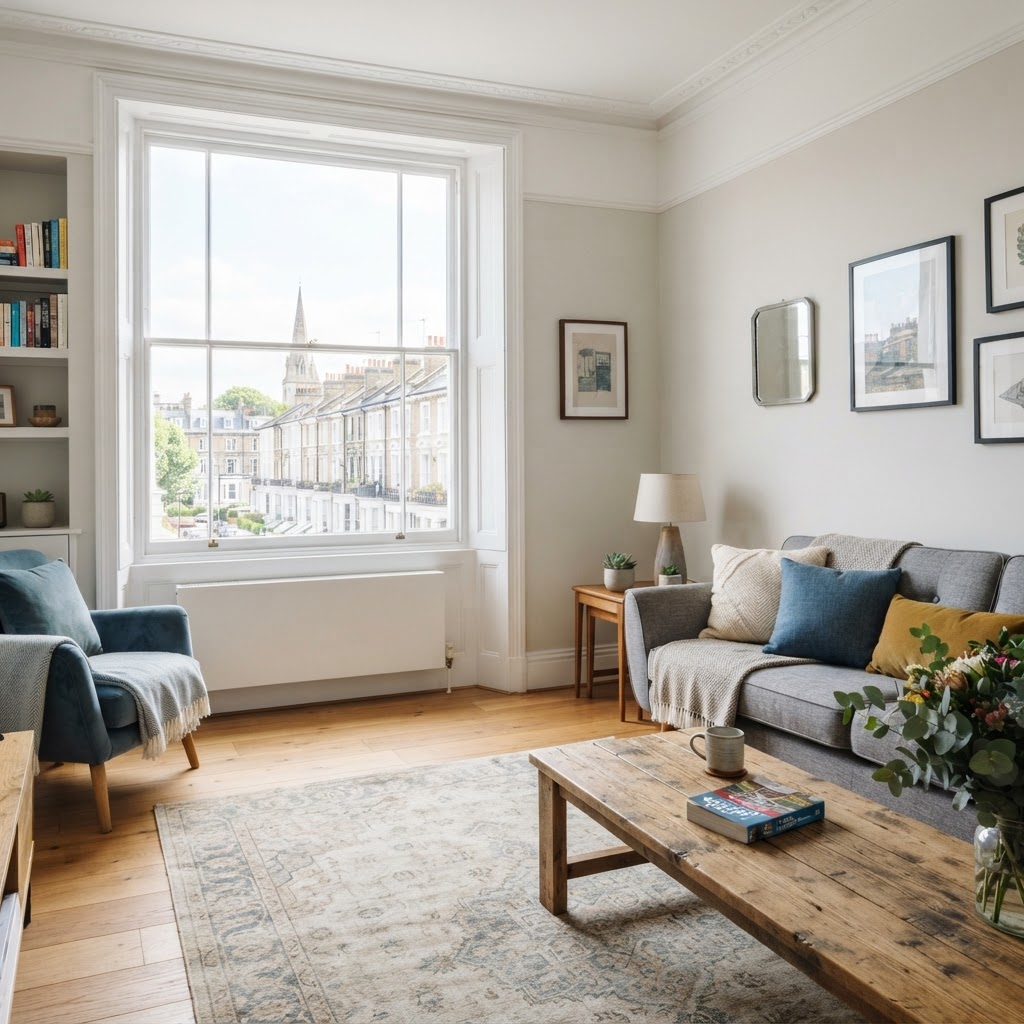
Most hosts spend weeks perfecting their pricing strategy and almost no time on the thing that actually stops a guest from scrolling past: the photos. A property with average images and sharp pricing will consistently lose to a property with outstanding images and average pricing. That is not an opinion — it is something you see play out across dozens of listings the moment you start comparing conversion data.
Why photos decide your booking rate before price does
When a guest lands on Airbnb's search results, they spend roughly two to three seconds on each listing before deciding whether to click or keep scrolling. Your nightly rate, your reviews, your location pin — none of those are processed in that window. The only thing being evaluated is the cover photo. Once they click through, the remaining images either hold their attention long enough to reach the booking button or they lose interest and go back.
Airbnb's own internal data, referenced in host communications as far back as 2019, indicated that professionally photographed listings earned around 20% more per year than comparable listings without professional images. That figure has been cited so often it has become background noise, but the underlying point stands: in a market like central Manchester or the Leeds city centre short-let corridor, where guests have forty comparable options within half a mile, the visual presentation of your listing is doing more commercial work than almost any other variable you control.
What Airbnb's algorithm actually does with your images
Airbnb uses image quality signals as part of its search ranking logic. Listings flagged internally as having low-quality photos — typically identified through a combination of resolution checks, brightness analysis and click-through rate data — are ranked lower in default search results regardless of their review score. This is not documented transparently in Airbnb's host-facing materials, but it is something operators managing multiple listings notice when they re-shoot a property: rankings shift within days of uploading new, higher-resolution images, even without any other changes to the listing.
The platform also tests your cover photo against variants shown to different user segments. If your click-through rate from search results is low, Airbnb may automatically cycle through your other images to find one that performs better. This means uploading a strong set of twelve to twenty images — not just a handful — gives the algorithm more material to work with and reduces the risk of a weak default selection pulling down your overall visibility.
How to shoot a room that photographs bigger than it is
The majority of UK short-let properties are not large. A two-bedroom flat in Liverpool's Baltic Triangle or a studio in Birmingham's Digbeth is not going to look like a villa in the Cotswolds, and that is fine — but you do need to make considered decisions about how each room is shot if you want it to read well on a screen. The single most effective change most hosts can make without hiring anyone is to shoot from a low angle in the corner of the room, pointing diagonally across the space. This creates depth, shows multiple surfaces at once, and makes almost any room appear roughly a third larger than a straight-on shot from standing height.
Natural light is not optional. Shoot during the day, open every blind and curtain fully, and turn on every lamp and overhead light simultaneously. The combination of natural and artificial light fills shadows and gives rooms warmth that neither source achieves alone. Overcast days are often better than direct sunlight, which creates harsh contrast and blows out windows. If you are shooting in a south-facing property in summer, late morning before 11am or late afternoon after 3pm tends to produce the most manageable light.
Declutter aggressively before you shoot. Every visible object is either adding to the story the photo tells or distracting from it. Phone chargers, toiletry bottles on the bathroom shelf, coats on hooks by the door — remove them all. Dress the bed properly with crisp, white or neutral linen, add two or three cushions in a consistent colour palette, and fold a throw at the foot. These are not decorating suggestions; they are staging decisions that directly affect how long a guest looks at the image.
The cover photo: one shot that does most of the work
Your cover photo should almost always be the bedroom if it is genuinely attractive, or the living space if the bedroom is unremarkable. Guests book short-lets primarily for the experience of sleeping somewhere comfortable and having a space that feels better than a hotel room. The kitchen is rarely the right cover photo unless it is a genuinely exceptional feature — an open-plan kitchen-living space in a well-styled flat can work well, but a standard galley kitchen will not.
One pattern worth knowing from managing properties across several UK cities: listings in urban locations perform better with a cover photo that includes a window with a recognisable view or a strong sense of the neighbourhood. A bedroom shot in a Leeds city centre flat that shows the skyline through the window will convert meaningfully better than the same bedroom shot with the blinds drawn. Guests searching in a specific city want visual confirmation that the listing delivers on the location promise.
Caption strategy: the detail almost every host ignores
Airbnb allows you to add a caption to every image in your gallery. The vast majority of hosts leave these blank. This is a missed opportunity that costs nothing to fix. Captions serve two purposes: they reinforce specific selling points that the image alone might not communicate, and they provide text that Airbnb can index when matching listings to guest searches.
Write captions that add information rather than describe what is already visible. "Bedroom" tells a guest nothing they cannot see. "King-size bed with blackout blinds — ideal for late check-outs" tells them something useful. "South-facing living room with views over the city" contextualises what they are looking at. "Rainfall shower with instant hot water" addresses a concern guests might have without requiring them to read the full listing description. Keep each caption to one short sentence and focus on the feature most likely to matter to your target guest.
When to hire a professional — and what to pay in the UK
For most properties earning above £2,000 per month in gross booking revenue, professional photography pays for itself within the first month of improved performance. In practical terms, a competent property photographer in the UK charges between £150 and £350 for a full short-let shoot depending on location and property size. London rates are typically at the top of that range; photographers in cities like Sheffield, Leeds or Liverpool tend to sit between £150 and £220.
Airbnb no longer offers its own photography programme in most UK markets, so you will need to source this yourself. Search for real estate or interior photographers rather than generalist photographers — they understand how to shoot spaces rather than people or products, and their editing style will suit your needs without briefing. Ask to see examples of interior shoots specifically, and check whether their standard package includes light editing or full retouching, as some charge separately for colour correction and window pulls (adjusting the exposure of windows so the view outside is visible rather than blown out).
Request RAW files or high-resolution JPEGs — you own these and can reuse them across Booking.com, your direct booking site and social media
Ask for at least one wide-angle shot of each room plus one detail shot showing a key feature such as the shower, the view or the kitchen worktop
Ensure the photographer shoots in landscape orientation — Airbnb's grid displays landscape images significantly better than portrait
Book the shoot for a morning with a favourable weather forecast if the property has meaningful natural light
If you are managing the property yourself and cannot yet justify the cost, a recent iPhone or Android flagship with the standard wide-angle lens will outperform an older DSLR with poor light and bad staging. The staging and the light matter more than the camera body for most short-let shoots. That said, the moment the property is generating consistent income, reinvesting in a professional shoot is one of the highest-return decisions you can make.
For hosts operating in competitive urban markets, photo quality is not a refinement — it is a baseline requirement. Whether you are listed in London, Manchester, Birmingham or elsewhere, the same principle applies: guests choose with their eyes first. If you want to see what a well-managed listing in your area could realistically earn with the right presentation and pricing strategy, Truestays offers a free income estimate with no obligation — you can request one at truestays.com/pricing.
Ready to get started?
Get a free personalised income estimate for your property. No commitment, no pressure.