
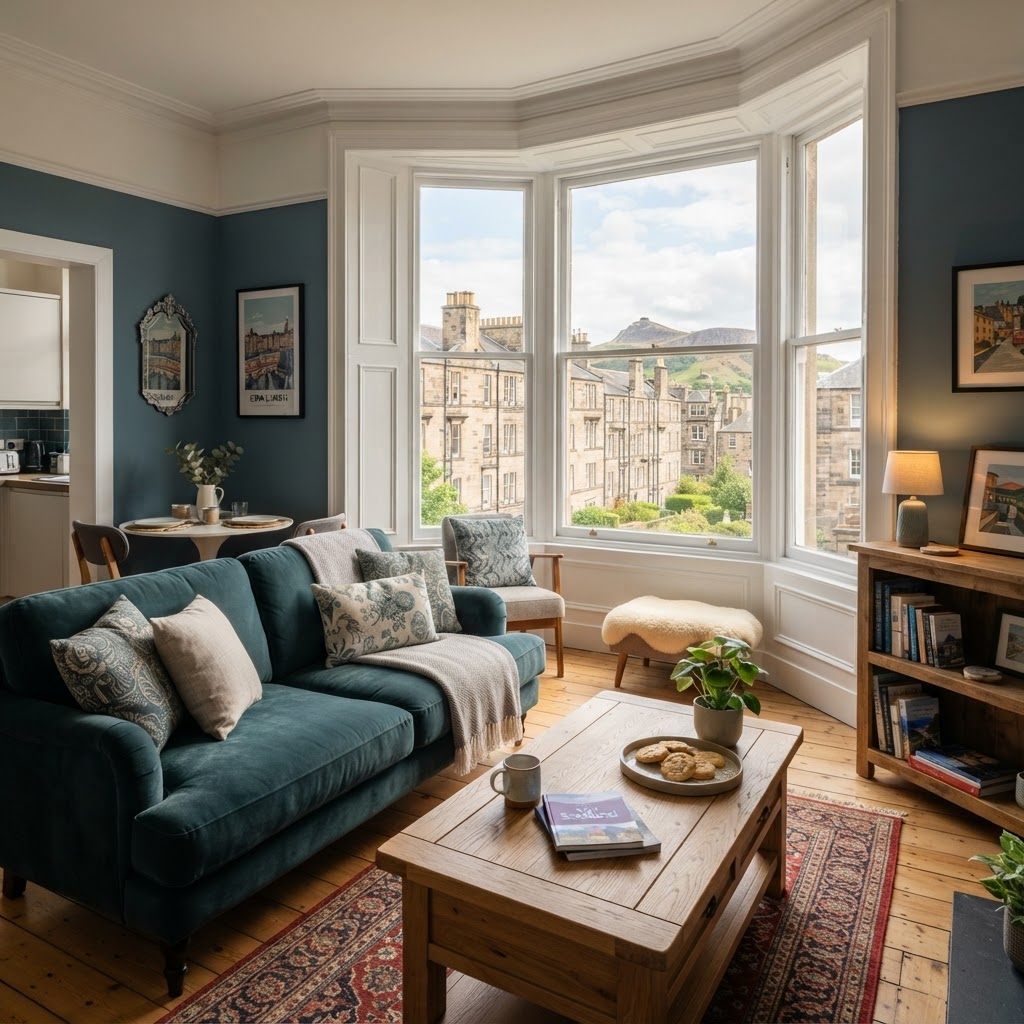
The furnishing decisions you make before your first guest checks in will shape your review scores, your nightly rate and your maintenance costs for years. Most new hosts either overspend on things guests ignore or underspend on things guests will mention in every review. This guide cuts through that and tells you what actually matters.
Why furnishing quality directly affects your income
Guests do not book on price alone. On Airbnb, photos are the first filter and reviews are the second. Both are almost entirely determined by how the property is furnished and presented. A well-furnished two-bedroom flat in Manchester can consistently achieve £110 to £140 per night. The same flat, poorly furnished, will sit at £75 to £90 and attract guests who are more price-sensitive and less careful with the property.
The relationship between furnishing and ADR (average daily rate) is not theoretical. Across properties we manage at Truestays, the difference between a mid-spec and a high-spec furnishing job in comparable properties in the same postcode regularly amounts to £15 to £25 per night. Over a year at 70% occupancy in a two-bedroom property, that gap is worth £3,800 to £6,400 in additional gross revenue. The furnishing investment pays back quickly when you do it properly.
Setting a realistic furnishing budget
For a one-bedroom flat, budget £3,500 to £5,500 to furnish it to a standard that will perform well on Airbnb. A two-bedroom property sits at £5,500 to £8,500. A three-bedroom house done properly will cost £8,000 to £13,000. These figures include furniture, bedding, kitchenware, soft furnishings, artwork, lighting and all the small operational items guests expect to find.
Hosts who try to do a two-bedroom property for £2,500 almost always end up refurnishing within 18 months. Cheap beds break, cheap sofas sag and cheap mattresses generate complaints that kill your review average. Spending at the lower end of the proper budget range upfront is nearly always cheaper than the alternative.
IKEA, Dunelm and John Lewis form the backbone of most well-run UK short-let properties. IKEA works well for case furniture like wardrobes, bed frames and storage. Dunelm is strong for soft furnishings, bedding and kitchenware. John Lewis is worth using for mattresses and sofas, where quality directly affects guest comfort and longevity. For statement pieces and artwork, smaller online retailers and even Facebook Marketplace can work well if you have an eye for it.
Room-by-room furnishing priorities
The bedroom is where you should spend the largest share of your budget. A bad mattress will appear in your reviews within the first fortnight. Spend at least £300 to £450 on a mattress per bed. The John Lewis Specialbuys range and the Emma Original are both solid choices at this price point. Pair it with a 13.5 tog duvet, two sets of hotel-style white bedding per bed so your cleaner can always do a full changeover, and four pillows per double bed. Guests notice pillow count more than almost anything else in the bedroom.
The kitchen needs to be fully operational. Guests who book a self-catering property expect to be able to cook a proper meal. That means a sharp chef's knife, a decent non-stick frying pan, a saucepan set, a colander, a chopping board, a tin opener, a kettle, a toaster and a cafetière or coffee machine. A Nespresso machine costs around £80 and significantly improves guest perception of the kitchen. Leave a small supply of pods on arrival.
The living room needs a sofa that seats the maximum guest capacity comfortably, a television of at least 43 inches (55 inches in a larger property), and enough ambient lighting to make the space feel warm in photos and in person. Overhead lighting alone makes a living room look flat and unwelcoming. A floor lamp and one or two table lamps cost very little and make a significant difference to both photos and guest experience.
The bathroom should feel clean and considered. A matching set of towels in white or a neutral shade, a bath mat, a soap dispenser and a shower caddy are the basics. Add a small mirror if the bathroom does not already have one. Guests staying for work trips or weekends away use the bathroom first thing in the morning and last thing at night. It needs to feel functional and fresh.
What guests actually notice (and what they don't)
Guests are remarkably consistent in what they mention in reviews and what they photograph for their own social media. They notice the bed, the shower pressure, the coffee situation, whether the blackout blinds actually block light, and whether the place feels clean and thought-through. They do not notice whether your dining chairs are from IKEA or a boutique furniture shop. They do not care about brand names on soft furnishings.
What guests respond to emotionally is a sense that the host has considered their stay. That comes through in small details: a full-length mirror somewhere in the property, a drying rack available for longer stays, USB charging points near the bed, good water pressure and a shower head that actually works. These things cost very little but show up repeatedly in positive reviews. The full-length mirror is one of the most consistently mentioned items in five-star reviews across properties we manage in Leeds, Birmingham and Liverpool.
Durability versus aesthetics: getting the balance right
The biggest mistake hosts make is buying furniture that photographs beautifully but falls apart under short-let usage. A short-let property in a busy city might have 200 or more guest nights per year. That is significantly more wear than a typical residential home. Sofas with delicate upholstery, light-coloured carpets, wooden floors without a protective finish and open shelving with decorative items that can be knocked over are all poor choices for short-let use.
Upholstered furniture should be in a mid-tone colour with a performance fabric. Dark grey, charcoal and teal all hide everyday marks better than pale grey or cream. Flooring in high-traffic areas should be LVT (luxury vinyl tile) or a short-pile carpet in a mid-tone. Both are easy to clean and durable. Avoid light oak wood effect floors in kitchens and hallways because they show every scuff within months.
Artwork and decorative items should be fixed to walls where possible or positioned where they cannot easily be knocked over. Freestanding lamps in tight spaces get knocked by luggage. Wall-mounted reading lights in bedrooms are a better choice than bedside table lamps in a property with heavy turnover.
When to refresh and what to replace
Mattresses should be assessed every two to three years in a busy property. Pillows need replacing annually as they lose support quickly under heavy use. Duvets typically last two to three years. Towels and bedding should be audited after every 60 to 80 washes and replaced when they start to look thin or grey regardless of how well they are laundered.
Sofas and upholstered chairs in a property doing 65% or more occupancy will typically need replacing every four to five years. Bed frames last longer, usually six to eight years if they are solid construction. Kitchenware, particularly non-stick pans and utensils, should be checked annually and replaced as needed. A pan with a scratched non-stick coating left in the kitchen will generate a complaint.
Replace pillows annually in any property doing over 150 guest nights per year
Audit towels and bedding every 60 to 80 washes
Check non-stick cookware each year and replace any scratched or warped pans
Assess mattresses every two to three years based on guest feedback and visible condition
Plan a soft furnishing refresh every three to four years to keep photos current and guest satisfaction high
One thing that is easy to miss: keep a note of exactly what you bought and where, including the product names and links. When you need to replace a sofa cushion cover or match an existing bed frame, being able to find the original item quickly saves significant time and cost. We recommend a simple shared document with photos of each item and the purchase source.
If you are setting up a new property or thinking about whether your current furnishing spec is holding back your income, Truestays can give you a free income estimate based on comparable properties in your area. Visit our resources page or get in touch directly to find out what a well-presented property in your location should realistically be earning.
Ready to get started?
Get a free personalised income estimate for your property. No commitment, no pressure.