
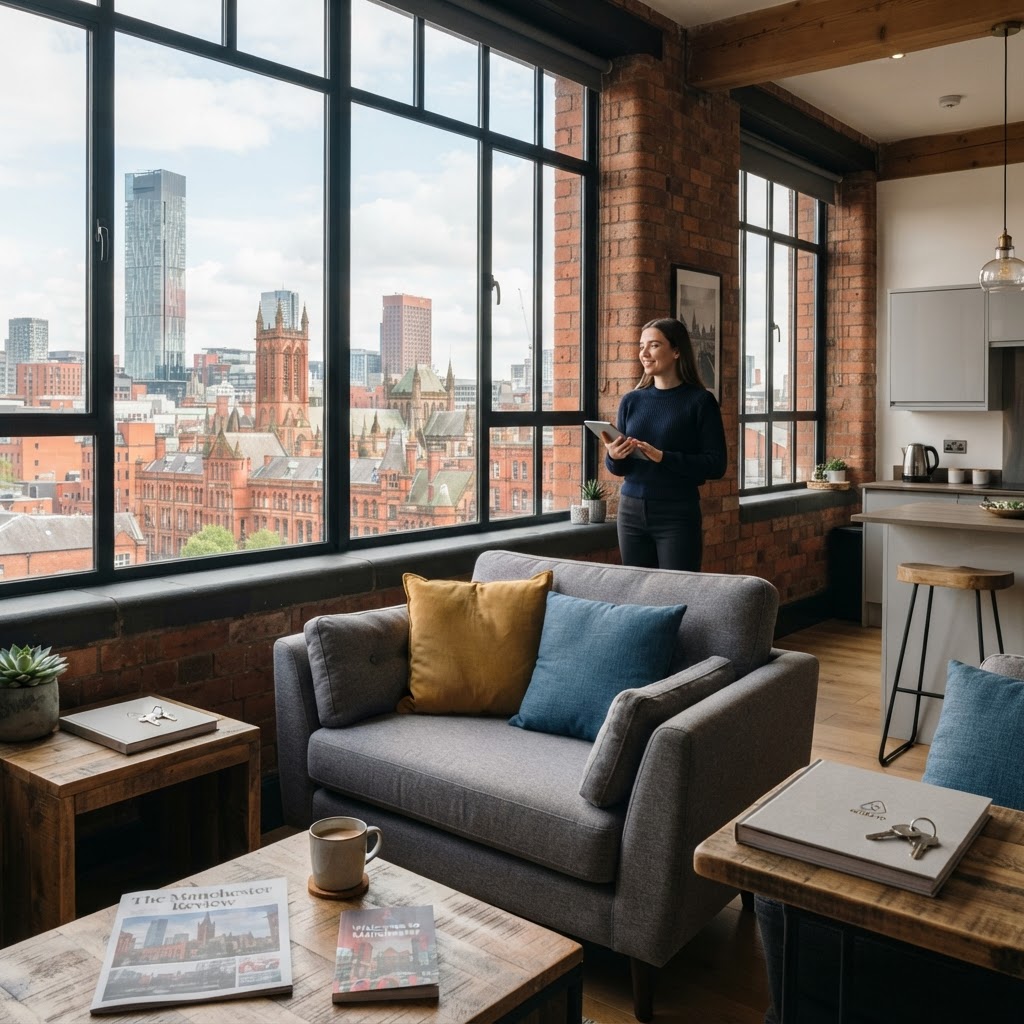
Manchester is one of the most-asked-about cities from landlords considering a move into short lets. The figures that circulate online vary wildly, and many of them come from platforms with a vested interest in showing you the optimistic end of the range. This guide pulls from real operator experience across dozens of Manchester properties to give you a grounded picture of what you can actually expect.
What does the Manchester short-let market actually look like?
Manchester sits in the top five UK cities for short-let demand, behind London but comfortably ahead of most other regional centres. The city draws a consistent mix of corporate travellers, event-goers, football tourists, university visitors and weekend leisure guests. That diversity matters because it smooths out the troughs that single-demand markets suffer. A property in, say, a purely leisure coastal town might spike in summer and go quiet in winter. In Manchester, a slow August weekend can be offset by a Oasis reunion crowd or a trade show at Manchester Central.
There are currently around 4,500 active short-let listings across Greater Manchester on Airbnb alone, with a significant proportion concentrated in the city centre, Salford Quays and Ancoats. Supply has grown over the past three years, which has pushed average daily rates down slightly compared to the peak post-pandemic period of 2022. That said, well-positioned and well-managed properties are still outperforming the market average by a meaningful margin.
How much can a Manchester Airbnb realistically earn?
The honest answer is that it depends heavily on the property, how it is managed and where it sits. A one-bedroom apartment in the Northern Quarter that is well-furnished, actively priced and managed properly will perform very differently to a two-bedroom flat in Hulme with dated interiors and static pricing.
As a rough benchmark based on properties we have managed or analysed in detail: a one-bedroom city centre apartment typically generates between £18,000 and £26,000 gross per year. A two-bedroom apartment in a good location can reach £28,000 to £40,000 annually. Three-bedroom properties, particularly houses with parking in areas like Didsbury or Chorlton that attract family and contractor groups, can push beyond £45,000 in gross revenue. These are gross figures before management fees, platform fees, cleaning, utilities, maintenance and mortgage costs.
Occupancy rates for well-managed Manchester properties typically sit between 72% and 85% across the year. Average daily rates in 2024 ranged from around £85 for a one-bed on a quiet midweek night to £220 or above during major event weekends. The Eras Tour residency at the Co-op Live Arena in summer 2024 pushed some city-adjacent two-beds to £350 per night for those specific dates. Operators who used dynamic pricing tools and had minimum stay rules set correctly captured that uplift. Those with static rates or long minimum stays largely missed it.
Which areas of Manchester perform best for short lets?
Ancoats and the Northern Quarter consistently perform well for shorter leisure stays. These neighbourhoods have strong identity, good bars and restaurants within walking distance, and appeal to the kind of guest who pays a premium for character over corporate. Average nightly rates here tend to run 10 to 15% above the city-wide average for comparable property sizes.
Salford Quays and MediaCityUK attract a strong corporate and contractor audience. Stays here tend to be longer, which reduces turnover costs, and midweek occupancy is reliably high because of the BBC, ITV and surrounding media businesses. The trade-off is that weekend leisure demand is softer than the city centre, so properties here need to be priced and positioned differently to maximise overall revenue.
Didsbury is worth highlighting as an area that is often underestimated. It is not the obvious short-let choice, but detached and semi-detached houses here attract a specific and high-spending guest profile: families visiting Manchester for hospital appointments at the Christie or Wythenshawe, groups attending weddings in the south of the city, and long-stay professionals. A well-presented four-bedroom house in Didsbury can gross over £50,000 per year with the right management approach. That surprises people who default to city centre apartments as the only viable option.
Deansgate and Spinningfields skew more corporate and tend to have higher average rates but are also more sensitive to supply fluctuations given the density of apartment buildings in those areas. Piccadilly and the areas immediately around the station suit shorter stays and transient guests, which means higher turnover and more operational complexity.
What drives occupancy in Manchester?
Manchester's event calendar is one of its biggest commercial assets for short-let operators. Old Trafford and the Etihad Stadium between them host fixtures most weekends from August to May, and each game generates a demand spike across the city. The co-op Live arena, which opened in 2024 with a 23,500-person capacity, has added significant new event nights that were not in the market before. Operators who monitor event calendars and adjust pricing and minimum stays proactively will consistently outperform those who set and forget.
The university calendar also matters more than most landlords anticipate. Manchester has three major universities and a combined student and academic population that generates substantial family visit demand around freshers' week in September and graduation in June and July. These are not the highest-rate periods, but they are reliable volume weeks that lift overall occupancy.
Corporate demand from the professional services firms concentrated around Spinningfields, the NHS trusts and the various media businesses at MediaCity provides a steady midweek floor throughout the year. This is the segment that many new operators underestimate because they focus on the exciting event spikes rather than the reliable midweek bookings that actually underpin annual income.
What costs eat into your Manchester Airbnb income?
Gross revenue figures are the ones that get shared at dinner parties. Net income is what matters. A Manchester city centre apartment grossing £28,000 per year might net its owner £14,000 to £18,000 after all costs, depending on how it is managed and financed. The main cost categories to model carefully are:
Management fees: full-service Manchester short-let agencies typically charge between 15% and 25% of gross revenue. At the lower end you may be doing more of the coordination yourself. At the higher end you should expect pricing management, guest communication and linen logistics to all be handled.
Platform fees: Airbnb charges hosts around 3% on the host-only fee structure, which is what most professional operators use. Booking.com charges around 15%, which is why channel mixing matters.
Cleaning and linen: in Manchester, professional cleans for a one-bed apartment typically cost £55 to £80 per turnover. For a three-bed house, budget £100 to £140. These costs scale directly with occupancy, so high occupancy is not purely upside.
Utilities: short-let properties use significantly more energy than vacant properties. Budget £150 to £250 per month for a one or two-bedroom city centre flat depending on the building and season.
Maintenance: set aside at least 8 to 10% of gross revenue annually for repairs, replacements and general upkeep. Short-let use accelerates wear on everything from sofas to washing machines.
If you are financing the property with a buy-to-let mortgage, check that your lender permits short letting. Many do not without prior consent, and this is an area where you should take specific legal and financial advice rather than assume. Tax treatment of short-let income also depends on your individual circumstances, and the rules around Furnished Holiday Lettings changed materially in April 2025, so speaking with an accountant who understands property income is genuinely important before you commit.
Is Manchester worth it compared to other northern cities?
Manchester typically outperforms Leeds and Sheffield on average revenue per property, largely because of the scale and diversity of its demand base. Leeds has a strong corporate and event market but a smaller leisure draw. Sheffield has lower property prices but also lower nightly rates, which means yields can be comparable in percentage terms but the absolute income is lower. If you are choosing between northern cities purely on short-let income potential, Manchester tends to win on gross revenue, though its property prices are higher, which affects your overall return on capital.
Liverpool sits closest to Manchester as a comparable market and is worth modelling alongside it if you are flexible on location. Our Liverpool short-let management page covers the specific dynamics there. For landlords already based in the north-west who want a city centre property, Manchester's depth of demand makes it a lower-risk short-let bet than most alternatives at a similar price point.
If you want to understand how Manchester stacks up against other cities we operate in, the Leeds and Birmingham markets each have their own income profiles that are worth reviewing before you make a location decision.
If you have a Manchester property and want a realistic income estimate based on its specific location, size and current condition, Truestays can provide a free projection with no obligation. It takes five minutes and gives you actual numbers to work with rather than platform averages that may bear little resemblance to what your specific property would achieve.
Ready to get started?
Get a free personalised income estimate for your property. No commitment, no pressure.