
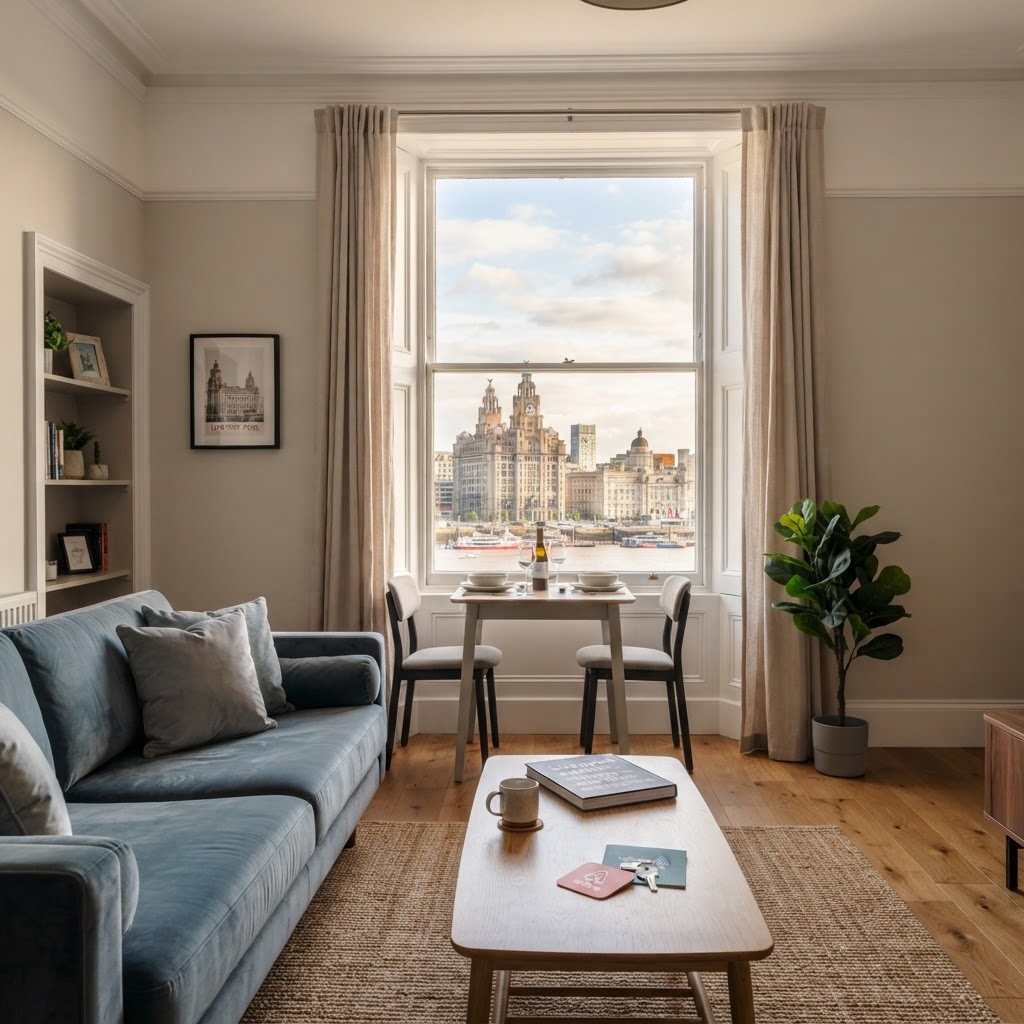
Liverpool is one of those cities that consistently surprises people who look at it properly. The short-let market here is more mature than most hosts expect, and the income ceiling is higher than the city's relatively modest property prices might suggest. This guide breaks down what hosts are genuinely earning, which postcodes outperform, and what you need to know before you commit.
What the average Liverpool Airbnb actually earns
Based on live market data and our own managed portfolio experience, a well-presented one-bedroom apartment in Liverpool city centre generates between £18,000 and £24,000 gross per year. A two-bedroom in a strong location — Baltic Triangle, the Ropewalks or close to the waterfront — will typically sit between £26,000 and £36,000 annually. Three-bedroom houses in areas popular with groups, particularly in the L1 and L3 postcodes, can push above £40,000 in a strong year.
These are gross figures before platform fees, management fees, utilities, cleaning and maintenance. Net income after all costs for a mid-range two-bedroom typically lands somewhere between £17,000 and £23,000, depending on how the property is managed and how aggressively it is priced across the calendar.
Occupancy rates in Liverpool for well-managed properties average around 72–78% annually. The city benefits from a strong and varied demand base — tourism, football, concerts, business travel, and university-related stays — which smooths out the seasonal dips that hit more tourism-dependent cities harder. August and the summer months are the obvious peaks, but weekends stay consistently busy throughout the year.
Which areas of Liverpool perform best
The Baltic Triangle is the standout performer right now. It has the design-led aesthetic that photographs well, a concentration of bars and restaurants that guests actually want to be near, and it skews towards younger leisure travellers and creative industry visitors who tend to leave strong reviews. Average nightly rates in Baltic Triangle for a two-bedroom sit around £130–£160 at weekends, with midweek at £90–£110 when managed dynamically.
The waterfront and L2/L3 city centre postcodes perform solidly and have the benefit of proximity to the M&S Bank Arena (formerly the Echo Arena), which generates consistent event-driven spikes. Concerts, conferences and the large-scale events the arena hosts — it holds up to 11,000 — can push nightly rates up by 40–60% during peak nights. If you own near there, you price around the arena calendar the same way a hotelier would.
Woolton, Aigburth and the south Liverpool suburbs are worth mentioning because they attract a different guest profile entirely: families visiting for longer stays, people attending events at Anfield or Goodison who want space and parking, and contractors working on the various regeneration projects around the city. Nightly rates are lower — typically £80–£120 for a three-bedroom — but so is the purchase price, and the yield calculation can stack up very well for the right buyer. The Liverpool management team at Truestays covers both the city centre and these suburban pockets.
What drives occupancy in Liverpool
Liverpool's demand base is genuinely diverse, which is one of the things that makes it a resilient market. Football is the obvious one — Anfield alone draws millions of visitors annually, and Premier League match weekends see a city-wide compression of available rooms that pushes rates across every postcode. Goodison's upcoming closure and the move to the new Everton stadium at Bramley-Moore Dock, due to open in 2025, is something active investors are already watching carefully, as the new stadium sits right on the north docks and will generate a new demand epicentre.
Beyond football, Liverpool's music and culture tourism is significant and year-round. The city attracts a steady flow of visitors connected to its Beatles heritage, but more importantly it runs a continuous schedule of large-scale events at venues across the city. The Aintree Grand National in April is one of the single biggest short-let weekends in the north of England — properties within reasonable distance regularly achieve 3–4x their standard nightly rate across that four-day window, and bookings fill months in advance.
One thing that often catches new Liverpool hosts off guard: the university demand is stronger than most expect. The University of Liverpool, Liverpool John Moores, and Liverpool Hope collectively enroll well over 60,000 students, and graduation weekends in July create reliable two-night spikes that are worth building into your pricing calendar from day one. Parents travelling for graduations tend to book comfortably priced, well-presented accommodation and often leave excellent reviews.
What property types work best
In Liverpool city centre, apartments dominate the supply side of the market. The challenge is that many of the converted warehouse and modern build developments in L1 and L3 have restrictive lease clauses around short-letting — this is something buyers must check carefully before purchasing with short-let income in mind. Some managing agents in larger city centre blocks have become increasingly hostile to short-let operators in recent years, so due diligence on the lease and building management is non-negotiable. Always take professional legal advice before purchasing any leasehold property for short-let purposes.
Freehold terraced houses in the inner suburbs — particularly L6, L7 and L8 postcodes — offer a cleaner operational structure with no lease restrictions, and the three-bedroom format works particularly well for the group and family market. Purchase prices in these areas can still be found in the £150,000–£220,000 range, making the return on capital genuinely attractive relative to comparable properties in Manchester or Leeds. The trade-off is slightly lower nightly rates and more variable guest types, which places a premium on robust house rules and a solid pre-arrival screening process.
Costs you need to factor in
Liverpool's short-let cost base is fairly typical for a northern English city. Professional cleaning between stays for a two-bedroom runs £55–£80 per clean depending on the provider and turnaround requirements. Utility costs for a well-insulated city centre apartment typically run £150–£200 per month when operating at 70%+ occupancy. Linen and consumable replacement is an ongoing cost that new operators consistently underestimate — budget at least £600–£900 per year per property once you account for linen lifecycle, breakages and restocking.
Platform fees (Airbnb, Booking.com): typically 3–15% of booking value depending on the platform and pricing model
Full management fees if using an operator: typically 15–25% of gross revenue in Liverpool, inclusive of guest communication, maintenance coordination and linen
Council tax: short-let properties may qualify for business rates rather than council tax depending on the number of nights let — this area is subject to ongoing regulatory change, and you should seek professional advice on your specific circumstances
Annual safety certification: gas safety, EICR and portable appliance testing are legally required and typically cost £300–£500 per year combined
Is Liverpool worth it compared to other northern cities
The honest comparison comes down to what you are optimising for. Manchester generates higher absolute revenue figures in many cases, but purchase prices are significantly higher, particularly in the core short-let postcodes, and the market is more competitive. Liverpool offers a better entry price point and a demand base that is arguably more event-driven and less reliant on the corporate mid-week traveller — which means it is less exposed to the business travel fluctuations that have affected some Manchester properties.
Leeds is the closest comparison in terms of market maturity and purchase price. Leeds tends to have slightly stronger midweek corporate demand, which smooths occupancy through the week. Liverpool edges ahead on weekend rates and event-driven peaks, particularly during football season and major arena events. For a buyer choosing between the two, the deciding factor is usually personal familiarity with the city and the specific property opportunity, rather than one market being categorically superior.
What Liverpool has that neither city can fully replicate is a unique cultural identity that guests actively travel to experience. That drives genuine leisure tourism, repeat visitors, and the kind of reviews that build a listing's long-term ranking. From an operator's perspective, guests who are excited to be in Liverpool tend to be easier to host than guests who are simply passing through for work.
If you want to know what a specific Liverpool property could realistically earn based on its postcode, bedroom count and condition, Truestays offers a free income estimate with no obligation. You can get one through our Liverpool management page, or reach out directly and one of the team will put together a projection based on comparable live listings in your area.
Ready to get started?
Get a free personalised income estimate for your property. No commitment, no pressure.