
Leeds is one of the most talked-about cities for short-let investment outside London, and for good reason. But knowing the city attracts visitors is not the same as knowing where to buy, what to pay, and what returns you can realistically model. This guide cuts through the noise and gives you the specifics.
Why Leeds attracts short-let investors
Leeds has a genuinely diverse demand base, which is one of the most important things an operator looks for in any market. You have corporate travellers coming in for financial and legal services firms concentrated around the city centre and Headingley corridor. You have leisure guests visiting for events at First Direct Arena, which holds around 13,500 and runs a near-constant calendar of concerts and shows. You have families relocating or visiting students at the University of Leeds and Leeds Beckett. And you have a strong NHS presence, with Leeds Teaching Hospitals NHS Trust being one of the largest in Europe, generating consistent demand from medical professionals on short placements.
That mix matters because it smooths out the troughs. Cities that rely too heavily on one demand type, say university towns or pure leisure destinations, can see sharp dips in occupancy when that single driver goes quiet. Leeds rarely goes fully quiet.
Which areas of Leeds perform best for short lets
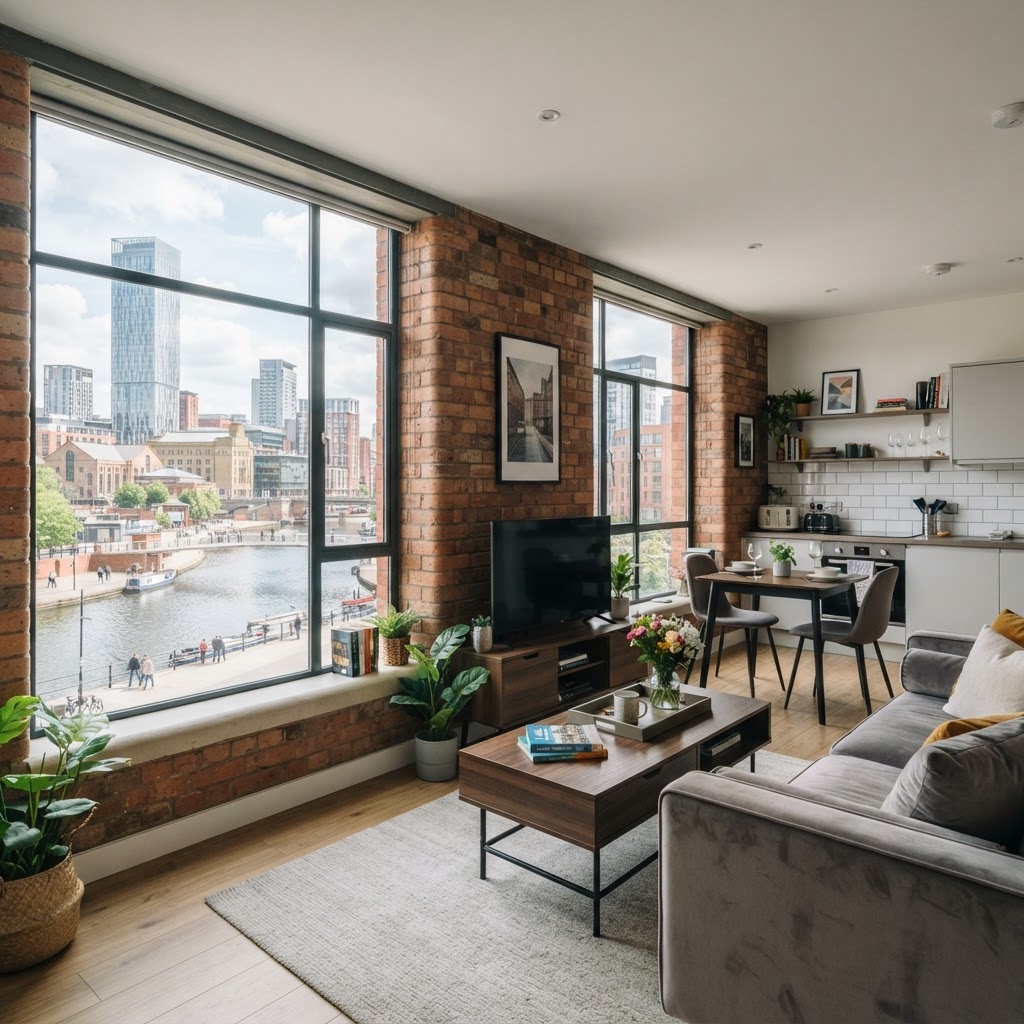
The city centre, particularly the LS1 and LS2 postcodes, consistently delivers the highest nightly rates. Apartments in the Calls area, Granary Wharf, and around Boar Lane attract both corporate and leisure guests. Converted mill buildings with exposed brickwork and high ceilings photograph exceptionally well and command a premium on Airbnb. A well-presented two-bedroom apartment in LS1 can achieve between £120 and £180 per night at peak, with average achieved rates across the year typically sitting in the £85 to £120 range depending on fit-out and management quality.
Headingley, in the LS6 postcode, is underused by short-let operators but quietly performs well. It sits close to the university, has its own bar and restaurant scene, and benefits from cricket at Headingley Stadium, which draws large crowds several times a year including Ashes Test matches. A two-bedroom property here will achieve lower peak rates than the city centre, perhaps £90 to £130 per night, but purchase prices are also lower, which can make the yield arithmetic more attractive.
Chapel Allerton and Roundhay sit further out and work best for larger properties. Four and five-bedroom houses targeting groups, family stays, or contractors on longer bookings can perform well here, though the market is thinner and management is more operationally complex. These are properties for experienced operators, not first-time short-let landlords.
Kirkstall and Meanwood sit between the centre and the suburbs and are worth watching as they gentrify, but at the time of writing they remain secondary markets with more limited short-let demand. Buying purely on price in these areas without evidence of booking demand is a risk.
What gross yields can you realistically expect
A realistic gross yield for a well-run short-let in Leeds city centre sits between 10% and 14% annually on the purchase price, assuming occupancy of around 70% to 80% across the year. That is before operating costs, which for a managed property typically run to 30% to 40% of gross revenue once you account for platform fees, management commission, cleaning, laundry, maintenance, and restocking. Net yields after all operating costs tend to land between 6% and 9% for city centre apartments, which compares favourably with long-let yields in the same postcodes, which have historically sat in the 5% to 7% range gross.
The important caveat is that these numbers assume the property is set up properly, priced dynamically, and managed to a standard that sustains strong reviews. A poorly photographed listing with static pricing and slow guest communication will underperform by 20% to 30% compared to a well-optimised equivalent. The spread between the best and worst operators in any given postcode is wider than most investors expect. If you want to understand how pricing strategy affects income, the Truestays pricing page has more detail on how we approach this.
Always seek independent financial advice when modelling investment returns, and speak to a tax adviser about how short-let income will be treated for your specific circumstances, particularly given recent changes to the Furnished Holiday Lettings regime.
What type of property works in Leeds
One and two-bedroom apartments in the city centre are the workhorses of the Leeds short-let market. They are easiest to fill, easiest to clean between stays, and suit the broadest range of guest types. Three-bedroom properties can work well but need a sharper marketing focus, either positioning clearly as a group or family stay, or targeting the contractor and corporate market with longer minimum stays.
Quirky or characterful properties consistently outperform identikit new-build apartments, even when the new-build has better facilities on paper. A converted weaving mill apartment in the Calls with original timber beams and cast-iron columns will attract more bookings at a higher rate than a generic glass-and-steel new-build nearby. If you are buying specifically for short-let, factor the interior appeal into your acquisition criteria, not just the square footage and location. The Truestays interiors guide covers what features make the biggest difference to listing performance.
Demand drivers and seasonality in Leeds
Leeds has a longer high season than many comparable northern cities. Summer weekends fill with leisure visitors. The autumn and spring conference calendar drives midweek corporate demand. The run-up to Christmas generates strong city centre bookings. Headingley cricket fixtures in June and July create genuine rate spikes, with some operators achieving 40% above their average nightly rate on Test match weekends.
The one genuine soft patch is January and early February, which is true of most UK city markets. The operators who manage this best do so by targeting the corporate and contractor segment more aggressively in Q1, using longer minimum stays and discounted weekly rates to maintain occupancy where leisure demand falls away. A blended strategy that does not rely entirely on the leisure market will produce more consistent annual income.
One thing that does not get mentioned enough in generic Leeds market commentary: the city's large NHS trust and associated teaching hospitals generate a quiet but significant volume of short-let demand from doctors, nurses, and medical researchers on fixed-term placements. These are often 2 to 8 week stays, excellent for occupancy, and guests who tend to look after the property well. If your property is within reasonable commuting distance of Leeds General Infirmary or St James's Hospital, it is worth building this into your channel strategy rather than relying solely on Airbnb leisure bookings.
What to watch out for before you buy
Leasehold restrictions are the most common way investors get caught out in Leeds. Many city centre apartment blocks, particularly those built in the 2000s development boom, have head leases that prohibit short-term letting, or require freeholder consent that is either refused or takes months to obtain. Always have a solicitor check the lease specifically for short-let restrictions before you exchange. This is not a theoretical risk; we have seen investors complete purchases only to discover their lease prevents them operating at all.
Service charges and ground rents on city centre blocks can also be high, sometimes £2,500 to £5,000 per year on larger developments, which eats directly into net yield. Get a full breakdown of anticipated service charges before you model your returns.
Leeds City Council has not yet introduced a formal short-let licensing scheme, but the regulatory direction of travel across the UK is towards greater oversight of the sector. Staying across planning and licensing developments is part of running a compliant operation. If you are considering a property that would need a change of use or sits in an area with Article 4 restrictions, take proper planning advice before proceeding.
Check the lease for short-let restrictions before exchange, not after
Verify service charge and ground rent figures in writing
Confirm the property is in a location with demonstrable short-let demand, not just a low purchase price
Model returns using realistic 70% to 75% occupancy, not best-case 90% figures
Factor in management, cleaning, and platform fees before calculating net yield
If you want a clear picture of what a specific Leeds property could earn under professional management, the team at Truestays offers a free income estimate based on real booking data from the local market. There is no obligation and it gives you a grounded starting point for your investment modelling.
Ready to get started?
Get a free personalised income estimate for your property. No commitment, no pressure.