
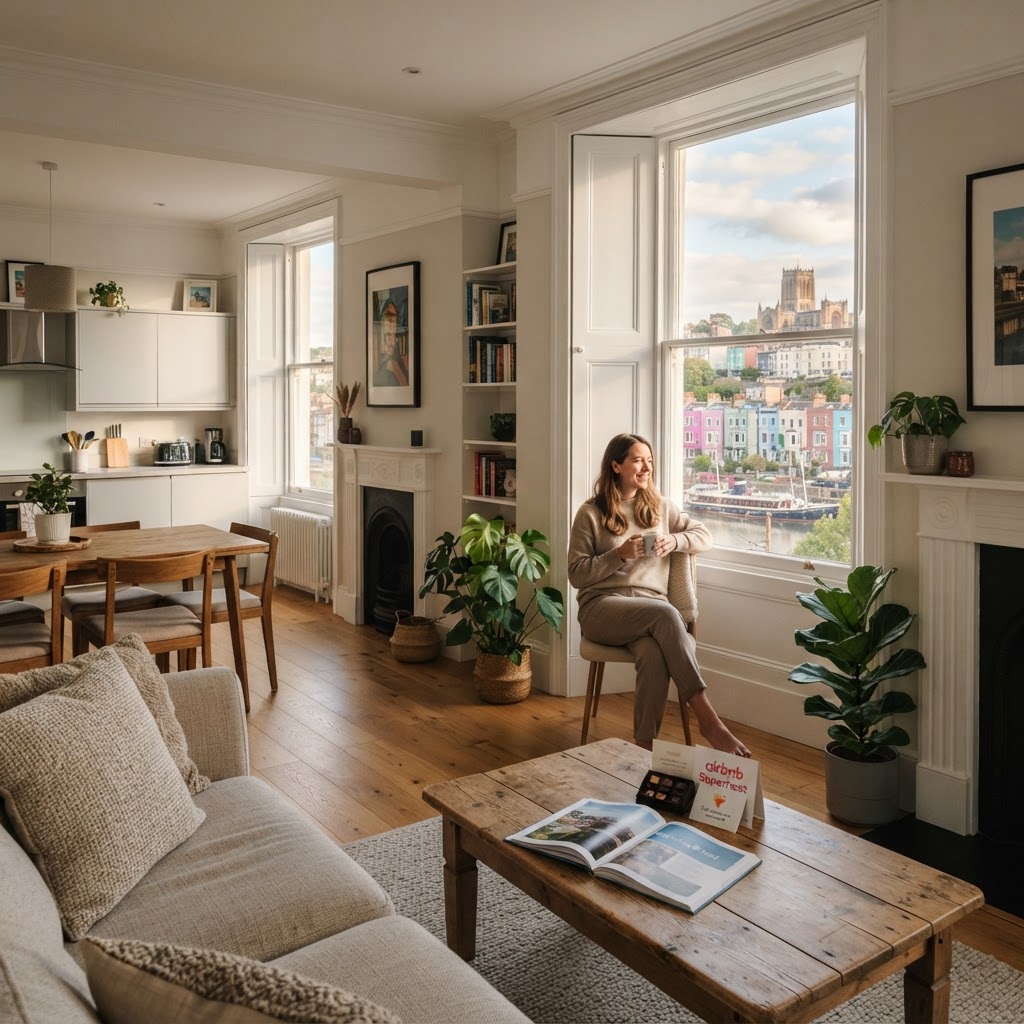
Bristol is one of the most searched short-let markets outside London, yet most of the income figures floating around online are either outdated or based on best-case scenarios that assume 90% occupancy year-round. This guide is based on real operator experience managing properties in Bristol and the wider South West, and gives you numbers you can actually stress-test against your own deal.
What does the Bristol short-let market actually look like?
Bristol draws a remarkably varied mix of guests. The city has a strong corporate travel base from companies including Airbus, Rolls-Royce and the BBC's presence at Whiteladies Road, which generates consistent midweek demand even outside peak tourist periods. On top of that, the University of Bristol and UWE bring in a steady flow of parents, visiting academics and prospective students. Add major events at the Ashton Gate Stadium, the Bristol Hippodrome, and the annual Balloon Fiesta in August, and you have a market that rarely goes completely quiet.
Compared to Manchester or Birmingham, Bristol is a smaller market by volume, but that works in favour of hosts who get their positioning right. There are fewer large-scale operators dominating the listings, and well-presented properties in the right postcodes consistently punch above the UK average for revenue per available night.
How much can a Bristol Airbnb realistically earn?
Based on operator data from properties managed across Bristol between 2023 and 2025, here are realistic gross revenue ranges by property size, assuming reasonably well-optimised listings and dynamic pricing:
Studio or one-bed flat (central): £18,000 to £26,000 per year
Two-bed flat or terraced house (central to inner areas): £26,000 to £38,000 per year
Three-bed house (well-located, parking or garden): £34,000 to £52,000 per year
Four-bed or larger, premium spec: £48,000 to £70,000 per year
These figures assume average occupancy of 68% to 78% over the year, with nightly rates ranging from around £95 for a one-bed up to £220 or more for a larger house on event weekends. During the Bristol Balloon Fiesta weekend in August, a three-bed house in a well-connected postcode can command £300 to £400 per night and still sell out days in advance. The Christmas and New Year period also performs strongly, while February tends to be the softest month in the calendar.
It is important to strip out costs before treating these figures as profit. A typical full-management fee in Bristol runs at 18% to 25% of gross revenue. Add cleaning fees (usually £60 to £120 per turn depending on property size), linens, consumables, maintenance and platform fees, and net income after costs usually lands at 55% to 65% of gross. So a two-bed generating £32,000 gross might net its owner somewhere between £17,600 and £20,800 before mortgage and tax. Always seek advice from a qualified accountant for your specific tax position.
Which areas of Bristol perform best for short lets?
Location within Bristol makes a significant difference. Clifton and Clifton Village is the strongest-performing area for premium nightly rates. Properties here benefit from the Georgian architecture, proximity to the Suspension Bridge, and the area's general appeal to both tourists and corporate travellers. A well-presented two-bed flat in Clifton regularly achieves £130 to £160 per night at peak times, with strong occupancy even midweek.
Redland and Cotham sit just east of Clifton and offer slightly lower acquisition costs with only a modest drop in rental performance. These areas appeal particularly to the visiting academic and family guest segment, and properties with parking or gardens tend to achieve disproportionately strong occupancy.
Harbourside and Spike Island perform well for city-break guests who want the waterfront experience. Occupancy here is more weekend-led and seasonal, with summer performing significantly better than winter. Bedminster and Southville, on the south side, have emerged as a genuinely strong market over the past three years as the area has gentrified. Nightly rates are lower than Clifton but acquisition costs are meaningfully cheaper, which can make the yield arithmetic more attractive for investors.
Stokes Croft and Montpelier attract a younger, experience-led traveller. Properties here can do well if styled thoughtfully, but the guest profile is less consistent and the area generates slightly more edge-case situations for hosts. It is not where we would point a first-time short-let investor.
What affects your income most in Bristol?
The single biggest lever in Bristol is pricing strategy. The gap between a statically priced listing and one using a properly calibrated dynamic pricing tool is often 20% to 30% in annual revenue, not because the static price is necessarily wrong, but because it misses the event spikes and drops occupancy during quieter periods by being too rigid. The Bristol Balloon Fiesta, large concerts at Ashton Gate, and graduations in late June and July are all moments where rates need to jump significantly above baseline.
Property presentation is the second major factor. Bristol guests, particularly in Clifton and Harbourside, have high expectations around interior quality. A dated or poorly photographed listing in a premium postcode will be outcompeted by better-presented properties at a higher price point. Professional photography and a properly styled interior are not optional if you want to sit in the top quartile of search results. The interiors and styling guidance on the Truestays resources page is worth reviewing if you are preparing a property for launch.
Minimum stay settings also matter more in Bristol than some other cities. A blanket two-night minimum will cost you midweek corporate bookings, which are often single-night stays from contractors and consultants working at the Rolls-Royce or Airbus sites in Filton. The most effective approach is a flexible minimum stay that shortens midweek and extends over peak weekends, which is something the better channel managers and pricing tools handle automatically. You can read more about how to set your Airbnb minimum stay to get this right.
Bristol short-let regulations: what you need to know
Bristol City Council has been watching the short-let sector closely, and the regulatory picture is shifting. At the time of writing, England does not have a mandatory short-let registration scheme in force, but the government has legislated for one and local councils are expected to have more oversight tools available from 2026 onwards. Bristol, as a city with visible housing pressure, is likely to be an early adopter of any new enforcement powers.
If your property is a leasehold flat, check the lease before listing. Many Bristol leases contain clauses that restrict short-let use, and some management companies have begun enforcing these actively. Freehold houses are more straightforward, but if you are letting the entire property for more than 90 nights per year in London the rules differ from the rest of England, so Bristol hosts are not subject to the London 90-night rule. Planning permission requirements can vary depending on how the property is used and for how long, so it is worth taking professional advice on your specific situation rather than assuming you are automatically compliant. The UK short-let planning and Article 4 guidance covers the broader framework in more detail.
Is Bristol worth it compared to long-let income?
A two-bed flat in Clifton that would achieve roughly £1,600 to £1,900 per month on a long let would typically generate £26,000 to £34,000 gross on a well-managed short let, which is £2,160 to £2,830 per month equivalent. After short-let costs, net income is usually £14,000 to £20,000, or £1,170 to £1,670 per month. On a straight net income comparison, long let and short let often come out closer than the gross short-let figures suggest.
The short-let advantage in Bristol is clearest for larger properties. A four-bed house in Redland that might achieve £2,800 per month on a long let can generate £50,000 to £60,000 gross short-let, netting £28,000 to £36,000 after costs, which is a meaningful premium. For smaller properties, the calculation is tighter and the additional operational complexity needs to be weighed carefully. Vacancy risk, maintenance frequency and the time cost of management are all higher with short lets, even when you use a professional management company.
If you want to see what your specific Bristol property could realistically earn on the short-let market, Truestays offers a free income estimate based on actual comparable data rather than best-case projections. Get in touch and we can give you a straight answer based on the area, size and current market conditions.
Ready to get started?
Get a free personalised income estimate for your property. No commitment, no pressure.