
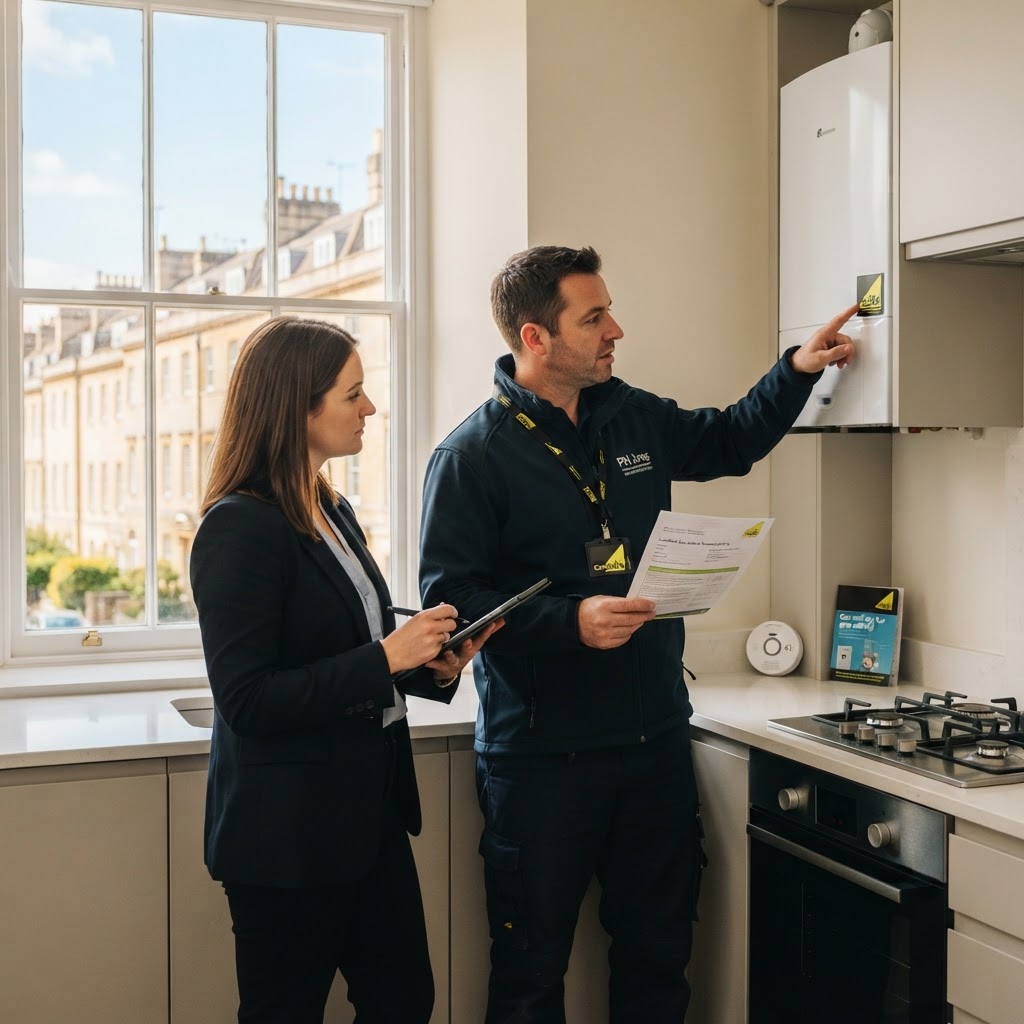
Gas safety is one area where short-let operators cannot afford gaps. Whether you rent out a one-bedroom flat in Sheffield or a six-bedroom house in the Cotswolds, if the property has any gas appliances, you are legally required to maintain them and carry out annual checks. The rules stem from the Gas Safety (Installation and Use) Regulations 1998, and they apply to holiday lets and serviced accommodation just as they do to assured shorthold tenancies.
Why gas safety law applies to short lets
There is a persistent assumption among newer hosts that gas safety rules are aimed at long-term landlords rather than short-let operators. That is incorrect. The Regulations apply to any premises made available to a person in return for payment, which covers Airbnb, Booking.com and any direct booking arrangement. The Health and Safety Executive (HSE) is the enforcing body, and its guidance confirms that holiday accommodation and serviced flats are within scope.
The duty holder is whoever is responsible for the property, which in practice means the owner if they self-manage, or the management company if they have taken on a lettings management role. If you use a short-let management agency and they are listed as the responsible party in your agreement, they may carry the compliance burden, but you should confirm this in writing. Do not assume it is covered.
What the annual gas safety check involves
Every gas appliance and flue in the property must be checked once every 12 months by a Gas Safe registered engineer. This is not optional and it is not something you can do yourself. The check covers boilers, gas hobs, gas fires, and any other gas-fired appliance in the property, including those in outbuildings if guests can access them.
The engineer will test for gas tightness, check burner pressure and heat input where possible, inspect the flue flow to confirm combustion products are being removed safely, and check that the appliance is operating correctly. At the end of the visit, they issue a Gas Safety Record (CP12). You need to keep this record for two years and make it available to guests before they arrive or at the property on check-in. Posting it in the welcome pack or leaving a copy in the property folder are both acceptable approaches.
The 12-month deadline is firm. If your check lapses by even a few days and something goes wrong, your insurance is likely to be void and you face personal liability. Many operators book their check for 11 months after the previous one to give a small buffer without losing the anniversary date over time.
Flue in a room: a rule many hosts miss
One regulation that catches out a surprising number of short-let operators is the restriction on open-flued appliances in rooms used for sleeping. Under Regulation 30 of the Gas Safety Regulations, an open-flued appliance cannot be installed in a room or internal space used as sleeping accommodation unless it is a balanced flue appliance, a room-sealed appliance, or it has been specifically exempted by the HSE.
In practice, this catches properties that have older gas fires in bedrooms, or where a back-boiler behind a gas fire sits in a room that guests might use as a sleeping space. We have seen this come up in older terraced properties in cities like Leeds and Manchester where the original layout placed a gas fire in what is now marketed as a bedroom. If your property has this configuration, you need to take advice from a Gas Safe engineer before letting guests stay. Simply removing the gas fire may not be sufficient if the flue is still present. Seek professional advice on your specific situation.
Carbon monoxide alarms and short lets
Since October 2022, the Smoke and Carbon Monoxide Alarm (Amendment) Regulations 2022 have required landlords in England to install a carbon monoxide alarm in any room used as living accommodation that contains a fixed combustion appliance. This includes gas boilers, gas fires and any other gas-burning equipment. The requirement applies from the first day of any new tenancy or letting after that date, which means virtually all active short-let properties are already within scope.
The alarm must be in working order at the start of each new let. In a short-let context, that effectively means it should be tested as part of your changeover process. Carbon monoxide alarms have a limited lifespan, typically seven to ten years, and the expiry date is usually printed on the unit. A combination smoke and CO alarm placed in a hallway does not satisfy the requirement if the boiler is in a separate utility room with no detector. The alarm must be in the same room as the appliance.
Scotland and Wales have their own rules, which differ slightly from England. If you operate in Edinburgh, Glasgow, Cardiff or Swansea, check the specific requirements for those nations rather than assuming the English regulations apply.
Record keeping and what to give guests
The Gas Safety (Installation and Use) Regulations require you to issue a copy of the current Gas Safety Record to any new occupant before they occupy the premises, or within 28 days of the check being completed. For short lets, the practical interpretation is that guests should receive or be able to access the record before or on arrival. This can be done by including a copy in the property manual, attaching it to your pre-arrival message, or displaying it in the property.
Operators managing multiple properties through a short-let management setup should have a compliance tracker that logs the check date, engineer details, Gas Safe registration number and the renewal due date for every property. A lapsed certificate on one property in a portfolio is an easy thing to miss without a system in place. Storing records digitally with automatic renewal reminders is straightforward and removes the risk of a missed deadline.
Keep the Gas Safety Record for a minimum of two years
Display or provide the record to guests before or on check-in
Test carbon monoxide alarms at every changeover
Book gas safety checks at 11 months to avoid anniversary drift
Confirm in writing which party holds compliance responsibility if you use a management company
What happens if you are not compliant
Non-compliance with the Gas Safety Regulations is a criminal offence. The HSE can prosecute, and penalties include unlimited fines and up to two years in prison for the most serious cases. Beyond the criminal exposure, a lapsed gas safety check will almost certainly void your short-let insurance policy, meaning any claim arising from a gas-related incident would not be paid out. That includes property damage and guest injury claims.
Airbnb and Booking.com do not actively verify gas safety compliance before a listing goes live, but that does not reduce your legal exposure. If a guest is injured or killed due to a gas fault and you cannot produce a valid certificate, the consequences are severe. There are real cases in the UK of landlords facing prosecution following carbon monoxide incidents in properties where the annual check had not been completed.
The gas safety obligations that apply to short lets in Birmingham, Bristol, London and every other part of England are the same. There is no exemption for occasional letting, no threshold based on the number of nights rented, and no grace period if your certificate lapses. If your property earns any income from guest stays and it has gas appliances, the rules apply in full. Always seek advice from a qualified Gas Safe engineer and a solicitor or compliance specialist for your specific property situation.
If you want to understand how Truestays manages compliance across a portfolio, including gas safety, CO alarms and all other regulatory requirements, you can get a free income estimate and find out what full management looks like for your property at Truestays.
Ready to get started?
Get a free personalised income estimate for your property. No commitment, no pressure.