
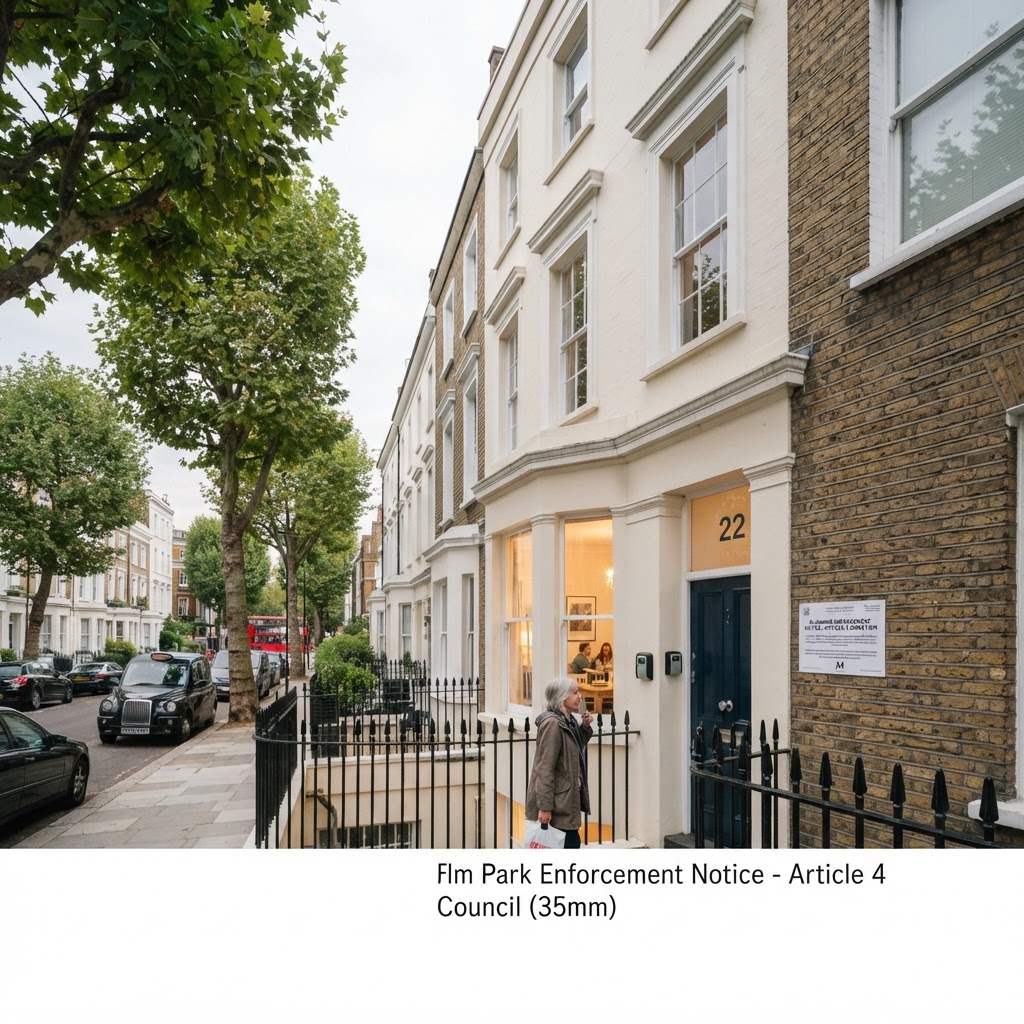
Article 4 directions are one of the most misunderstood pieces of planning legislation affecting short-let operators in the UK right now. Many hosts only discover they are affected when a neighbour complains or a council sends a letter. Understanding how these directions work -- and where they are spreading -- is essential if you want to operate a short-let legally and protect your investment.
What Is an Article 4 Direction?
Under normal planning rules in England, certain changes of use between property classes are permitted automatically -- they do not require a formal planning application. These are known as permitted development rights. An Article 4 direction is a tool local planning authorities can use to remove specific permitted development rights within a defined geographical area, forcing property owners to apply for full planning permission instead.
In the context of short lets, the relevant change of use is from a standard dwelling (Use Class C3) to a short-term let property (Use Class C5, which was introduced in England in April 2023). Without an Article 4 direction in place, most hosts can switch a property to short-let use without applying for planning permission at all. With one in place, they cannot -- at least not without going through the full application process.
It is important to understand that an Article 4 direction does not automatically ban short lets. It removes the automatic right to convert, which means the council gets to decide case by case whether the change of use is appropriate. Some applications will be approved. Others will not.
Which UK Cities Have Article 4 Affecting Short Lets?
London is the most prominent example. Several London boroughs have either implemented or consulted on Article 4 directions specifically targeting the C3-to-C5 change of use. Westminster, Camden and Tower Hamlets have been particularly active. Westminster has long had some of the tightest short-let rules in the country -- the 90-night annual cap on short lets without planning permission has existed there since the Deregulation Act 2015, and it effectively pre-dates the newer C5 class by nearly a decade. If you operate in London, you should already be treating compliance as a live issue, not a future consideration.
Outside London, Edinburgh is the most significant case study. Scotland has its own planning system, and Edinburgh City Council introduced short-let control areas in 2022, covering most of the city centre. Within those areas, converting a property to short-let use requires planning permission regardless of whether it has been let before. The policy was specifically designed to address housing stock loss in a city where residential rents rose by over 14% between 2021 and 2023.
In England, Manchester is widely expected to be one of the next major cities to adopt Article 4 directions targeting short lets. The council has been monitoring the growth of short-let stock in areas like the Northern Quarter, Ancoats and Deansgate, where housing pressure is significant. Bristol, Brighton and Oxford are also on the radar of planning professionals tracking this issue. None of these has yet implemented a full C5-specific Article 4 direction at city scale, but the political direction of travel is clear.
In Leeds and Birmingham, the position is less advanced but operators should not treat that as permanent reassurance. Local authorities across England have the power to introduce Article 4 directions with as little as 28 days' notice in urgent cases, though most follow a standard 12-month consultation period. The 28-day route is rare for housing matters but not impossible.
What Happens If You Ignore an Article 4 Direction?
Operating a short let in breach of an Article 4 direction is a planning enforcement matter. Councils can issue an enforcement notice requiring you to cease the short-let use and potentially restore the property. Failure to comply with an enforcement notice is a criminal offence under the Town and Country Planning Act 1990, carrying an unlimited fine on conviction in a magistrates' court.
In practice, councils vary enormously in how actively they pursue enforcement. Edinburgh has been more proactive than most English councils, pursuing cases where operators are listed on Airbnb without a licence under the separate short-let licensing regime that Scotland introduced in 2023. In England, enforcement has historically been patchy, but that is changing as housing pressure mounts and the political will to act increases. Operating outside the rules is a risk that compounds over time -- the longer you do it, the harder it becomes to regularise.
How to Check Whether Your Property Is Affected
The starting point is your local planning authority's website. Most councils publish their Article 4 directions in their local plan documents or as standalone notices. Search for your council name alongside 'Article 4 direction' and 'short-term let' or 'C5'. If you are in Scotland, search for 'short-let control area' alongside your council name.
If you cannot find a clear answer online, call the planning department directly. Ask two specific questions: first, whether an Article 4 direction removing C3-to-C5 permitted development rights exists in your area; second, whether any consultation on such a direction is currently underway. The second question matters because a direction under consultation is not yet in force, but it gives you time to consider your options.
Checking the planning register for your property address is also worth doing. If a previous owner or you yourself applied for a change of use to C5 -- or to sui generis short-let use before the C5 class existed -- that application and its outcome will be on the public register. Some properties in Edinburgh and central London already have the appropriate consent recorded, which simplifies any future sale or regulatory check.
Does Article 4 Apply to Existing Short Lets?
This is the question most operators ask, and the honest answer is: it depends on the specific wording of the direction and when you started letting. If a property was operating as a short let before an Article 4 direction came into force, you may be able to argue that the C5 use was already established -- meaning you do not need permission because the change of use happened before the restriction was introduced. This is called 'lawful use' and it can be formally confirmed by applying for a Lawful Development Certificate from the council.
The evidence required to support a Lawful Development Certificate application is more substantial than most operators expect. You will typically need booking records, bank statements showing rental income, utility bills and correspondence with guests -- all demonstrating continuous short-let use. Gaps in evidence or gaps in occupancy can undermine the application. If you are in an area where an Article 4 direction is being consulted on, gathering and storing this evidence now is a sensible precaution.
Seeking professional advice from a planning consultant or solicitor is strongly recommended before assuming your existing use is protected. Planning law involves specific facts and local circumstances that generic guidance cannot fully account for, and the consequences of getting it wrong are serious. This article provides an overview but is not a substitute for advice tailored to your situation.
What Should You Do If Your Area Gets an Article 4 Direction?
If you receive notice that your council is consulting on an Article 4 direction, you have options. First, respond to the consultation. Councils are required to consider representations, and while individual responses rarely overturn a direction, they contribute to the overall picture. Representations that engage with housing supply data, tourism economics and the specific geography of the proposed direction carry more weight than generic objections.
Second, assess whether your property already qualifies as having an established short-let use and apply for a Lawful Development Certificate before the direction comes into force if the evidence is strong. Third, if you are considering starting a new short let in an area with an active Article 4 direction, budget for a planning application from the outset. Application fees in England are currently £258 for a householder change of use application, though this is under review. The process typically takes eight to thirteen weeks.
Check your council's planning portal for any live Article 4 directions or consultations affecting C5 use
If you have operated a short let for over four years, speak to a planning consultant about securing a Lawful Development Certificate
Keep detailed booking and income records as ongoing evidence of established use
Factor planning costs into your investment calculations if you are acquiring property in high-risk cities like Edinburgh, London or Manchester
The UK short-let sector is maturing and regulation is moving in one direction. Operators who treat compliance as a cost of doing business -- rather than an inconvenience -- tend to build more durable portfolios. Understanding Article 4 before it affects you, not after, is the difference between a manageable administrative process and a genuine threat to your income.
If you want to understand how compliance requirements might affect the income potential of a specific property, the team at Truestays can give you a free income estimate based on real local data. Get in touch via the Truestays resources page or request a projection directly from your city page.
Ready to get started?
Get a free personalised income estimate for your property. No commitment, no pressure.